
High-Touch Areas in the Workplace That Need Regular Cleaning
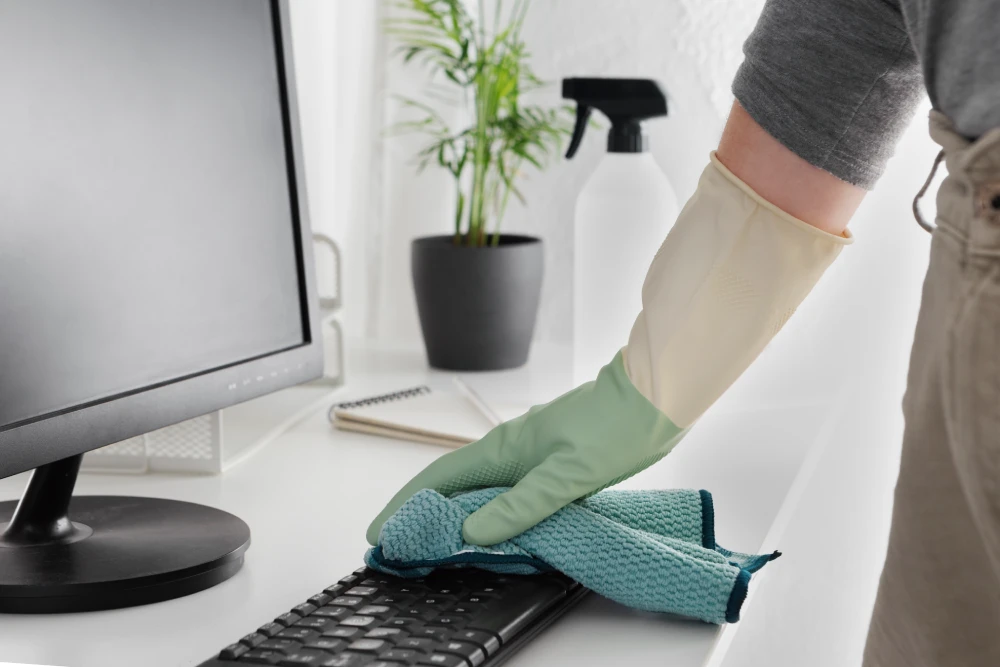
High-touch areas in the workplace include door handles, light switches, shared desks, keyboards, phones, lift buttons, kitchen appliances and bathroom fixtures. As an office or facilities manager, you should include these surfaces in your regular cleaning schedule because they collect dirt, oils and germs through repeated contact. Consistent cleaning helps maintain a hygienic, presentable and professionally managed workplace. Why High-Touch Surface Cleaning Matters? A workplace can appear tidy while frequently handled surfaces remain dirty. Floors may be vacuumed and bins emptied, but smaller touchpoints can easily be missed unless they are included in a detailed office cleaning checklist. At Sparkleworks Cleaning Services, we find that the most important high-touch areas depend on how your workplace operates. A small professional office may need greater attention around shared workstations and meeting rooms, while a customer-facing business may require more frequent cleaning around reception areas, counters and entrances. As the person responsible for workplace facilities, you should consider staff numbers, visitor traffic, shared amenities and operating hours when developing your cleaning schedule. 1. Entrance Doors and Access Points Main entrances are used by almost everyone entering or leaving your workplace. Door handles, push plates and access controls can quickly collect fingerprints, oils and visible marks. Your checklist should include: A clean entrance also supports the professional presentation of your business. We recommend inspecting customer-facing access points regularly, particularly during busy periods. 2. Light Switches and Lift Buttons Light switches are small but may be touched repeatedly throughout the day. They are particularly easy to overlook in meeting rooms, storage areas, kitchens and bathrooms. Lift buttons, automatic door controls and stairwell access buttons should also receive regular attention. From our experience cleaning workplaces, these are among the most commonly missed areas when cleaning focuses only on floors, desks and other large surfaces. 3. Shared Desks and Workstations Hot-desking and flexible working arrangements mean multiple employees may use the same desk, chair and equipment. Shared workstations should be cleaned between users or at a frequency suited to your office schedule. High-contact areas include: Encourage employees to clear their workstations at the end of the day. Paperwork, food containers and personal belongings can prevent cleaners from accessing the entire surface. 4. Keyboards, Phones and Office Equipment Keyboards, computer mice and desk phones receive frequent hand contact and can collect dust, crumbs and skin oils. Shared technology may require even more attention because multiple employees use it. Do not overlook: Electronic devices require appropriate cleaning products and methods. Avoid spraying liquids directly onto equipment. You should also confirm whether your cleaning provider or internal employees are responsible for maintaining these items. 5. Meeting Rooms and Collaborative Spaces Meeting rooms may accommodate several groups throughout the day, including employees, clients and visitors. Shared tables, chair backs, door handles and presentation controls should therefore be cleaned regularly. If meetings involve food or drinks, arrange for spills, crumbs and rubbish to be removed promptly. In a busy workplace, a quick room check between meetings can keep the space presentable and ready for the next group. 6. Staff Kitchens and Lunchrooms Communal kitchens are among the busiest shared spaces in many workplaces. Food preparation, spills and repeated contact with appliances mean these areas can become untidy quickly. Important touchpoints include: Based on our experience cleaning Gold Coast offices, workplace kitchens are easier to maintain when responsibilities are clearly defined. Employees should address spills and food waste promptly, while scheduled cleaning can cover benches, sinks, appliance surfaces, bins and floors. 7. Bathrooms and Washroom Fixtures Bathrooms combine frequent use with numerous shared touchpoints. Your workplace bathroom checklist should cover: A small office may require daily cleaning or several visits per week. A busy commercial facility may need multiple checks throughout the day, particularly when its bathrooms are also available to customers or visitors. 8. Reception and Visitor Areas Reception areas create an immediate impression of your organisation. They are also accessed by employees, clients, delivery drivers, contractors and other visitors. Frequently touched surfaces may include reception counters, sign-in tablets, pens, chair arms, door handles and brochure displays. As an office or facilities manager, you may need to inspect these areas during the day rather than waiting for the next scheduled clean. How Often Should High-Touch Areas Be Cleaned? There is no single cleaning frequency suitable for every workplace. Your schedule should reflect the number of employees, level of visitor traffic, shared facilities and frequency of use. As a general approach: Review your cleaning schedule whenever your workforce, operating hours or office layout changes. Staff feedback and routine inspections can also help you identify areas that need additional attention. Arrange Regular Office Cleaning on the Gold Coast Managing high-touch areas requires a consistent cleaning schedule rather than waiting until surfaces appear dirty. At Sparkleworks Cleaning Services, we provide professional office cleaning on the Gold Coast, with one-time office cleaning priced at $130. If your workplace needs ongoing cleaning, we also offer regular service discounts: Our service can include high-touch surface sanitising, workstation wiping, reception and meeting room cleaning, kitchen and bathroom cleaning, bin emptying, vacuuming and mopping. We can follow your existing facilities checklist or tailor the cleaning schedule to your office size, staff numbers, visitor traffic and operating hours. Contact Sparkleworks Cleaning Services to book your office clean or discuss a regular cleaning schedule for your Gold Coast workplace.
The Most Common Cleaning Issues Found During Final Inspections
The most common cleaning issues found during final inspections include dirty ovens, greasy range hoods, soap scum, dusty skirting boards, marked walls, unclean window tracks and debris inside cupboards. Based on our experience cleaning Gold Coast rental properties, these problems often occur because tenants focus on visible surfaces while overlooking the detailed areas property managers may check during an end-of-lease inspection. Why Do Cleaning Issues Arise During Final Inspections? A rental property can appear tidy without being ready for its final inspection. Once your furniture and belongings have been removed, dust, stains and marks that were previously hidden become much easier to see. Final inspections are also generally more detailed than routine property inspections. Your property manager may examine the kitchen appliances, bathroom fixtures, internal storage, flooring and other areas covered by the entry condition report or exit cleaning checklist. At Sparkleworks Cleaning Services, we regularly find that the most challenging areas are not necessarily the largest. Window tracks, exhaust fans, cupboard corners and skirting boards can be easy to forget, but they can affect the property’s overall presentation. 1. Grease and Food Residue in the Kitchen The kitchen is one of the most time-consuming areas to clean at the end of a tenancy. Grease, food residue and cooking splashes can build up gradually, particularly around the stovetop, oven and rangehood. Common kitchen cleaning issues include: From our experience, oven and rangehood cleaning often take longer than tenants expect. Leaving these tasks until moving day can make it difficult to achieve a thorough result before the final inspection. 2. Soap Scum and Grime in Bathrooms Bathrooms may be cleaned regularly throughout a tenancy, but soap residue, mineral deposits and grime can still develop over time. Property managers may notice cloudy shower screens, dirty grout lines, stained toilets or residue around taps. Hair and debris can also remain in drains, bathroom cupboards and less visible corners. Pay particular attention to: We recommend allowing enough time for bathroom cleaning products to loosen stubborn build-up rather than relying on a quick wipe immediately before handover. 3. Dusty Skirting Boards, Fans and Fixtures Dust on horizontal surfaces is easy to see once a rental property is empty. Skirting boards, window sills, ceiling fans and light fittings are often missed during regular household cleaning. During bond cleans, our team frequently finds dust on: Clean from the highest areas down so that falling dust does not settle on surfaces or floors you have already cleaned. 4. Dirty Window Tracks and Sills Window glass may receive attention, but tracks and sills are often overlooked. These areas can collect dust, insects, moisture and outdoor debris over the course of a tenancy. Gold Coast properties may also experience additional build-up from sand, humidity and open windows. Vacuuming loose debris before wiping the tracks can make the process easier and prevent dirt from spreading. Remember to check sliding door tracks as well, particularly around balconies, patios and outdoor entertaining areas. 5. Marks on Walls, Doors and Handles Once artwork and furniture have been removed, scuff marks, fingerprints and dust can become more noticeable. Areas around door handles, light switches and hallways often show the most wear. Some marks can be removed with appropriate spot cleaning. However, you should take care when cleaning painted surfaces, as harsh products or aggressive scrubbing may damage the finish. Cleaning cannot correct every issue. Permanent stains, damaged paint or holes may require maintenance or repairs rather than additional cleaning. If you are unsure, check with your property manager before attempting the work. 6. Dust and Debris Inside Cupboards Cupboards, drawers, wardrobes and shelves should generally be emptied and wiped before your final inspection. Crumbs, hair, dust and old shelf liners can easily remain behind after you pack. Based on our experience, cupboard corners and drawer edges are especially easy to miss. Check storage areas in the kitchen, bathroom, laundry and bedrooms, not just the most frequently used cabinets. You should also wipe handles and external cupboard surfaces to remove fingerprints and grease. 7. Floors That Still Look Dirty Vacuuming and mopping should usually be among the final tasks completed. Cleaning other parts of the property can cause dust and debris to fall onto the floors, so cleaning them too early may mean they need to be done again. Common flooring issues include: Use cleaning methods suitable for the flooring material. Too much water or an unsuitable chemical can damage certain timber, laminate or stone surfaces. 8. Rubbish and Forgotten Items Small amounts of rubbish can make an otherwise clean property look unfinished. Check inside cupboards, behind doors, on balconies and around external bin areas for packaging, cleaning products or personal belongings. Do not forget garages, storage cages, laundries and outdoor areas included in your tenancy. Emptying household bins is also important, but the bins themselves may require cleaning if they contain residue or unpleasant odours. How Can You Prepare for the Final Inspection? Before you begin cleaning, ask your property manager for an exit checklist and review your entry condition report. These documents can help you understand which areas require attention. We suggest that you: Remember that cleaning and property damage are different matters. A cleaning service can address dirt and grime, but it cannot repair damaged fixtures, broken fittings or permanent surface damage. Prepare Your Gold Coast Rental for Handover Moving out can be demanding, especially when you are coordinating packing, removalists, utilities and your new home. Our team can take care of the detailed cleaning work and help you prepare the rental property for its final inspection. With more than 10 years of cleaning experience, Sparkleworks Cleaning Services understands the areas commonly overlooked during end-of-lease cleaning. Our bond cleaning service on the Gold Coast can cover kitchens, bathrooms, cupboards, floors, skirting boards, window tracks and other key internal areas. Contact our team to discuss your property, cleaning requirements and preferred moving date.
Bond Cleaning vs Regular Cleaning: What Is the Difference?
The main difference between bond cleaning and regular cleaning is the level of detail and purpose of the service. Regular cleaning maintains your home from week to week, while bond cleaning prepares an entire rental property for the final inspection. Bond cleaning follows a much more extensive checklist and covers areas that are often excluded from routine household cleaning. What Is Regular Cleaning? Regular cleaning is designed to keep your home clean, comfortable and manageable while you are living in it. It may be completed weekly, fortnightly or monthly, depending on your household, lifestyle and cleaning needs. A regular house clean commonly includes: The purpose is ongoing maintenance. Regular cleaning controls everyday dust, dirt and spills before they become more difficult to remove. At Sparkleworks Cleaning Services, we find that clients who maintain a consistent cleaning schedule generally have less accumulated grime to address later. However, even a well-maintained rental will usually need more detailed attention before the tenant moves out. What Is Bond Cleaning? Bond cleaning, also called end-of-lease cleaning or vacate cleaning, is a comprehensive service completed when you leave a rental property. Its purpose is to prepare the property for the final inspection and handover. Unlike regular cleaning, bond cleaning covers the property in much greater detail. It usually follows a room-by-room checklist based on the condition of the home and the requirements provided by the property manager or real estate agent. Our bond cleaning service may cover: From our experience working with Gold Coast tenants and property managers, these smaller details are often where cleaning issues are noticed during a final inspection. Bond Cleaning vs Regular Cleaning: Key Differences Although both services make your home cleaner, they are intended for different situations. Area Regular Cleaning Bond Cleaning Purpose Maintains the home during your tenancy Prepares the property for the final inspection Frequency Weekly, fortnightly or monthly Usually completed once when moving out Level of detail Focuses on everyday cleaning Covers detailed and commonly overlooked areas Time required Usually completed within a shorter visit Often requires several hours or longer Property condition Completed while the home is occupied Usually completed after belongings are removed Checklist Based on general household needs Often guided by an agent’s exit checklist Appliances and storage Internal cleaning may not be included Ovens, cupboards and drawers are commonly covered Because a bond clean is more extensive, it normally requires more time, equipment and planning than a standard house clean. Can Regular Cleaning Replace a Bond Clean? Regular cleaning can reduce the amount of work needed at the end of your tenancy, but it does not usually replace a full bond clean. During a routine clean, areas such as the inside of the oven, window tracks, exhaust fans, skirting boards and empty cupboards may not require attention every week. By the end of a tenancy, however, these areas form part of the property’s overall presentation. We often see rental properties that have been kept generally tidy but still need considerable work before handover. Once furniture and personal belongings are removed, hidden dust, marks and grime can become much more visible. If you have consistently maintained your home, your final clean may be easier. You should still check the property carefully against the exit condition requirements supplied by your agent. When Should You Book a Bond Clean? You should arrange your bond clean once your furniture, boxes and personal belongings have been removed. This gives our cleaners access to floors, cupboards, wardrobes, skirting boards and other areas that may otherwise be blocked. Where possible, avoid scheduling the clean at the last minute. Booking early gives you more flexibility when coordinating movers, key handover and the final inspection. Before the appointment, we recommend that you: Carpet cleaning, external window cleaning or other specialised work may need to be arranged separately depending on the property and your booking. Confirming the scope beforehand helps avoid misunderstandings. Why Is a Professional Bond Clean Worth Considering? Moving involves packing, transporting belongings, updating services and preparing your new home. Completing a detailed end-of-lease clean on top of these tasks can be time-consuming and physically demanding. Our professional bond cleaners bring the appropriate products, equipment and a checklist-focused process. We work through the property carefully, paying attention to the areas commonly checked during rental handovers. While no cleaning company can control the final decisions made by a landlord or property manager, a thorough professional clean can help reduce the risk of avoidable cleaning concerns. Prepare Your Gold Coast Rental for Handover The choice between regular cleaning and bond cleaning depends on your situation. If you are still living in the property and need ongoing household maintenance, regular cleaning is the appropriate service. If you are moving out and preparing for a final inspection, you will need a more comprehensive bond clean. At Sparkleworks Cleaning Services, we bring more than 10 years of cleaning experience to apartments, units, townhouses, family homes and investment properties. Our bond cleaning service on the Gold Coast is designed to help tenants, landlords and property managers prepare rental properties for inspection and handover. If you are planning a move, contact our team to discuss your property, cleaning requirements and preferred booking date.
How Often Should Airbnb Properties Be Deep Cleaned?

Based on our experience cleaning short-term rentals across the Gold Coast, we recommend deep cleaning your Airbnb every three to six months, in addition to a thorough turnover clean after every guest. However, properties with frequent bookings, family groups, pets or a beachfront location may require deep cleaning every one to three months to maintain the standard guests expect. What Is an Airbnb Deep Clean? At Sparkleworks Cleaning Services, we view deep cleaning as a detailed reset of your property. It goes beyond the tasks normally completed during a guest changeover and addresses the dirt, dust and grime that gradually accumulate over time. A typical turnover clean focuses on preparing the property for your next guests. Deep cleaning covers less visible or harder-to-reach areas, which may include: From our experience, these are often the areas that look acceptable at first glance but can affect the overall freshness and presentation of your accommodation. How Often Should You Deep Clean Your Airbnb? For most Airbnb properties, a professional deep clean every three to six months provides a practical starting point. Your ideal schedule, however, should reflect your occupancy rate, property type and the way guests use the space. 1. High-Occupancy Properties: Every One to Three Months If your Airbnb receives back-to-back bookings, we recommend arranging a deep clean every one to three months. When our team cleans busy short-term rentals, we commonly find that dirt accumulates around kitchen appliances, underneath furniture and along skirting boards. Bathrooms can also develop soap residue and limescale despite being cleaned after each stay. More frequent deep cleaning helps prevent this build-up from becoming difficult to manage during a limited changeover window. 2. Moderate-Occupancy Properties: Every Three to Six Months If your property maintains steady bookings without operating at full occupancy, deep cleaning every three to six months may be sufficient. Many hosts find it helpful to schedule a detailed clean before a busy holiday period or after several months of regular bookings. This gives us an opportunity to address overlooked areas and restore a consistent standard throughout the property. 3. Low-Occupancy Properties: At Least Twice a Year Even if your Airbnb is only booked occasionally, we suggest deep cleaning it at least twice a year. In properties that remain vacant for longer periods, we may find dust, stale odours, moisture or insects that are unrelated to guest activity. A scheduled deep clean helps keep the accommodation fresh and prevents minor issues from becoming noticeable when bookings resume. Gold Coast Properties May Need More Frequent Cleaning Our experience with Gold Coast properties has shown us how quickly sand can travel from the entrance into bedrooms, bathrooms and living areas. Coastal humidity can also contribute to musty odours, mildew or mould in spaces with limited ventilation. You may need more frequent deep cleaning if your property: We also recommend considering an additional deep clean before school holidays, major local events or other peak booking periods. Beginning a busy period with a thoroughly cleaned property can make your upcoming guest changeovers more manageable. Turnover Cleaning and Deep Cleaning Have Different Purposes We often remind hosts that turnover cleaning and deep cleaning are not interchangeable. You need both to maintain your Airbnb properly. A turnover clean should be completed after every guest. It generally includes cleaning the bathroom and kitchen, wiping surfaces, vacuuming and mopping floors, removing rubbish, making beds or changing linen where required, and completing a final presentation check. Deep cleaning deals with gradual build-up in places that cannot always receive detailed attention during a short changeover. It supports your regular Airbnb cleaning routine rather than replacing it. In our experience, properties with a planned deep-cleaning schedule are easier to prepare between guests because heavy grime and hidden dust are less likely to accumulate. Signs Your Airbnb Needs a Deep Clean You do not need to wait for your scheduled deep clean if the property is becoming harder to refresh. During our work with short-term rental properties, some of the most common warning signs we notice include: If the property still looks tired after its usual turnover clean, it may be time for a more detailed service. Guest feedback can also highlight areas that need additional attention. Create a Schedule That Reflects Your Bookings There is no single deep-cleaning schedule that suits every Airbnb. We recommend basing your plan on booking frequency, seasonal demand, guest capacity and the property’s location. Keep a record of turnover cleans, deep cleans and maintenance concerns so that important tasks are not overlooked. Your schedule should also remain flexible. A long stay, a large group, a pet booking or a particularly busy month may mean the property needs to be deep cleaned earlier than expected. When you work with our team, you can also share your own cleaning checklist and presentation requirements. This helps us understand the standard you want maintained for every guest. Let Our Team Help Keep Your Airbnb Guest-Ready At Sparkleworks Cleaning Services, we understand that Airbnb hosts often have a limited window between check-out and check-in. Through our experience supporting Gold Coast hosts and property managers, we know that reliable cleaning and attention to detail are essential for keeping short-term accommodation running smoothly. Our Airbnb cleaning service on the Gold Coast can assist with guest changeovers, kitchen and bathroom cleaning, vacuuming, mopping, rubbish removal, linen changes where required, restocking by arrangement and final presentation checks. Whether you manage one holiday rental or several properties, we can help you develop a cleaning routine based on your occupancy and property requirements. Contact Sparkleworks Cleaning Services to discuss professional Airbnb cleaning for your Gold Coast property.